A group photo can look simple from the outside: gather everybody, straighten the rows, smile, and press the button.
But in many Black families, churches, reunions, and celebrations, the photograph carries a whole social language. Who stands where? Who chooses a color first? Which child is dressed like their mother? Which uncle has arrived in a suit nobody else could have pulled off? These details are not random. They are part of how a community shows personality, respect, relationship, and occasion.
The rules are often understood without being announced. That is why they are worth saying out loud.

Everyone gets to be themselves
The default Black group photo is not a uniform.
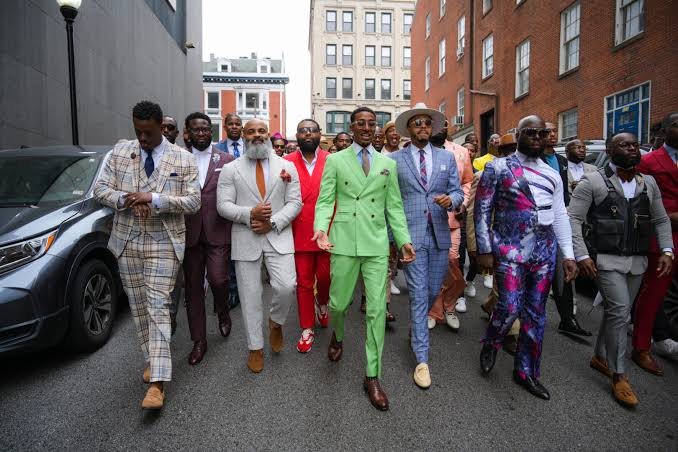
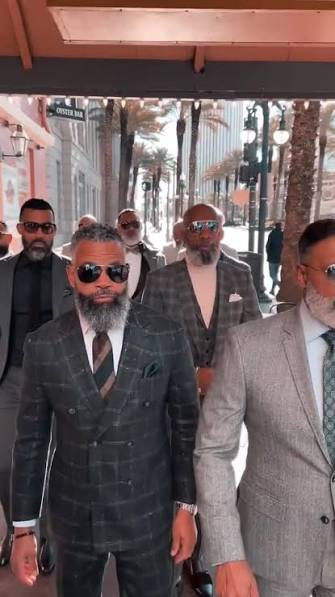
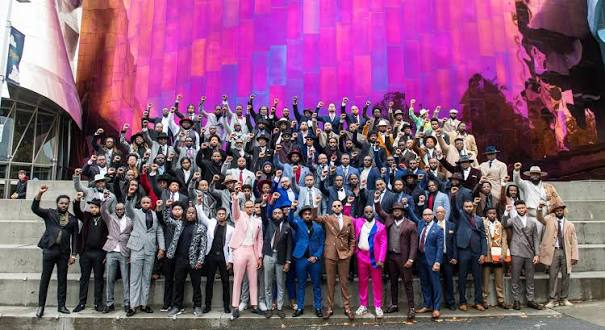
The men do not all need to wear the same color suit. The women do not need identical dresses. A family can coordinate without erasing everybody’s individual style. One person may be in navy, another in brown, another in gray, another in a jewel tone, and another in a pattern that becomes the story of the photograph. The group looks connected because the people are connected—not because a stylist made them interchangeable.
That distinction matters. Individual style is part of the portrait. A favorite color, a particular cut of a jacket, a pocket square, a hat, a brooch, a pair of shoes, or a carefully chosen tie can say something about the person standing inside the family picture.
Sunday best is personal
Black church style makes this especially clear. Formal dressing is not the same as matching.
A Sunday-best group photograph can hold many kinds of elegance at once: a sharp charcoal suit, a navy three-piece, a warm brown tailored look, a patterned vest, a polished dress, a hat, a brooch, or a color that announces itself from the back row. The clothing can honor the occasion while still allowing every person to arrive as themselves.
That is part of the etiquette. Looking good is communal, but the look itself remains personal.

Elders choose first
In a family portrait, age and position can shape the order of decisions. Elders may choose their colors first. Younger generations then find their own lane rather than competing with or duplicating the person who came before them.
This is not about taking creativity away from younger people. It is about recognizing family order and making room for distinction. The result is a photograph where generations can be read at a glance: connected, but not collapsed into one visual block.
There is also a tender exception. A mother may pass her color down to a daughter. A father may pass his color down to a son. When a child echoes a parent, it can feel like inheritance made visible—a small visual conversation across generations.
The occasion changes the rule
Good etiquette pays attention to why the group is gathered.
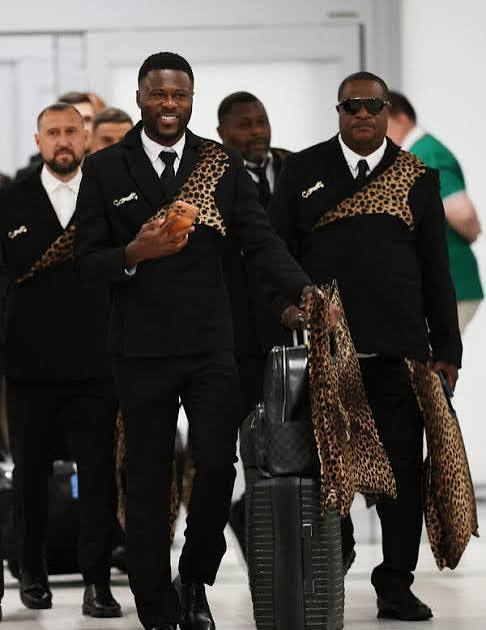
At a family reunion, everyone may intentionally wear the same color or the same event T-shirt. The sameness is the point. It marks the reunion as a shared occasion and turns the family into a team for the day.
A funeral carries its own language. The group may wear white, black, or a memorial T-shirt featuring the person who has died. In that setting, coordinated clothing is not about fashion sameness. It is about mourning, honor, and keeping somebody present in the picture.
The key is intention. Matching can be beautiful when it belongs to the occasion. It becomes careless when it is used as the default for people whose individuality the photograph should preserve.
Why this matters for the images we make
When we create a family portrait, a church scene, a reunion, or a historical group photo, clothing is part of the storytelling. It tells us who has authority, who is related, what the occasion means, and how each person understands their own presence.
That is why a group of Black characters should not automatically become a row of identical suits or identical colors. The image may be technically neat and culturally wrong. The people may look coordinated, but they no longer look like a real family, congregation, community, or gathering of accomplished adults.
The better approach is simple: let each person have a color, a silhouette, and a point of view. Let the elders establish the family’s visual rhythm. Let children inherit a color when the story calls for it. Let reunions and funerals make their own deliberate exceptions.
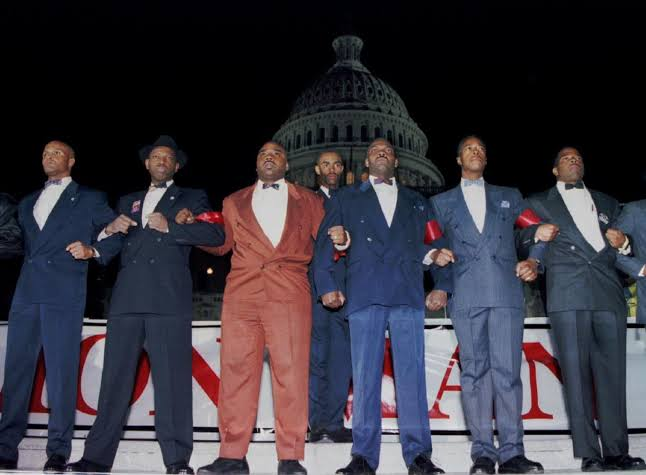
The group photo should show both truths at once: we belong to one another, and we are not the same person.
That is the part everybody may not say out loud—but everybody recognizes when the picture is right.